What Storm Damage Triggers a Roof Insurance Claim in Missouri?
Hail measuring 1 inch or larger, wind speeds exceeding 50 mph, and tornado activity all cause claimable roof damage in Missouri. Hail creates bruising on asphalt shingles that compromises granule adhesion, wind lifts or tears shingles from decking, and flying debris punctures roofing materials during severe storms.
Missouri averages 47 tornado touchdowns annually, with peak activity from April through June. The state's position in Tornado Alley and frequent severe thunderstorm systems make hail and wind the two most common roof damage sources statewide. Counties along the I-70 corridor from Kansas City to St. Louis see the highest hail frequency, with events recorded in 8 to 12 months per year in some areas.
Visible damage includes missing or creased shingles, dented flashing or vents, granule accumulation in gutters, and exposed underlayment. Interior signs like water stains on ceilings or attic decking moisture indicate penetration requiring immediate attention. Document all damage with dated photographs before any temporary repairs.
How Quickly Must You File After Storm Damage in Missouri?
Contact your insurance carrier within 48 to 72 hours of discovering damage to start the claims process. Missouri law does not mandate a specific notification deadline, but most homeowners' policies require prompt reporting—defined as 30 days to 12 months depending on your carrier and policy language.
Filing delays reduce claim approval likelihood. Carriers argue that unreported damage worsens over time, making it harder to distinguish storm damage from deferred maintenance or subsequent events. If you miss your policy's notification window, the carrier can deny coverage entirely regardless of damage severity.
Report the claim by phone, online portal, or mobile app depending on carrier preference. Provide the storm date if known, damage location on the roof, and any interior leak evidence. The carrier assigns a claim number and schedules an adjuster inspection, typically within 5 to 10 business days in non-catastrophic conditions. After major hail events affecting multiple counties, adjuster backlogs can extend inspection waits to 3 weeks or longer.
What Documentation Strengthens Your Missouri Roof Claim?
Photograph all visible damage from ground level and close-up if safely accessible, capturing shingle creases, missing tabs, dented metal components, and granule loss. Include wide shots showing roof sections and detail shots of individual damaged shingles with a ruler or coin for scale reference.
Collect dated weather reports from the National Weather Service or local news outlets confirming hail size, wind speed, and storm timing in your zip code. Missouri's regional NWS offices in Kansas City, St. Louis, and Springfield publish storm reports within 24 to 48 hours of severe weather events. This data corroborates your damage timeline and counters carrier arguments that damage occurred outside policy coverage periods.
Hire a licensed roofing contractor for a pre-adjuster inspection and written damage assessment. The contractor's report should list damaged components by quantity—number of affected shingles, linear feet of ridge cap requiring replacement, count of dented vents—and provide a repair or replacement cost estimate. Submitting this alongside your claim gives the adjuster a baseline for comparison and reduces lowball settlement risk.
What Happens During the Insurance Adjuster Inspection?
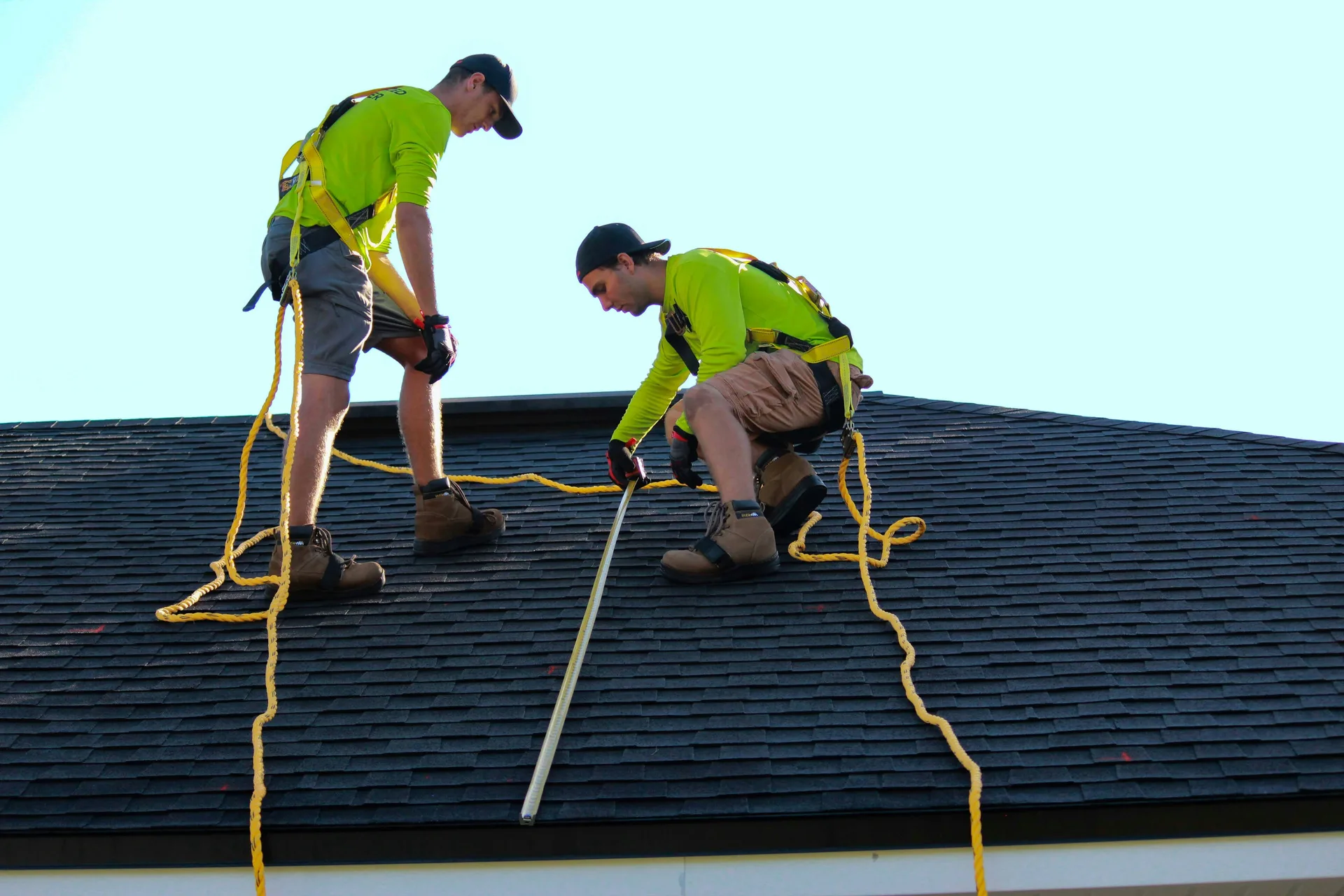
The adjuster walks your roof to assess damage extent, photographs affected areas, and measures square footage to calculate replacement costs. Adjusters use software like Xactimate to generate estimates based on material type, local labor rates, and regional pricing data. The inspection takes 30 to 90 minutes depending on roof size and damage complexity.
Having your contractor present during the adjuster inspection ensures nothing gets missed. Contractors spot subtle damage like shingle mat fractures or seal strip failures that adjusters trained to minimize payouts may overlook. If the adjuster and contractor disagree on damage scope, request a reinspection or invoke your policy's appraisal clause to bring in a third-party umpire.
The adjuster submits findings to the carrier within 3 to 7 business days. You receive a settlement letter detailing covered damage, depreciation withhold, your deductible amount, and the initial payout. Missouri carriers typically issue actual cash value payments first—replacement cost minus depreciation—then release recoverable depreciation after you complete repairs and submit paid invoices.
How Does Depreciation Affect Your Missouri Roof Claim Payout?
Insurance carriers depreciate roof replacement costs based on your roof's age at the time of loss. A 10-year-old asphalt shingle roof with a 25-year rated lifespan has already consumed 40 percent of its useful life, so the carrier withholds 40 percent of the replacement cost as depreciation.
Missouri's replacement cost value policies pay in two stages. The initial check covers actual cash value—full replacement cost minus depreciation and your deductible. After you complete the roof replacement and submit contractor invoices, the carrier releases the recoverable depreciation amount. If replacement costs $12,000 and depreciation totals $4,800, you receive roughly $7,200 initially (assuming a $0 deductible for simplicity), then $4,800 upon project completion.
Some policies cap recoverable depreciation recovery at 12 or 24 months post-claim. Delaying repairs beyond that window forfeits the withheld amount. Coordinate with your contractor to complete work and submit final invoices promptly to recover the full settlement.
What If the Insurance Company Denies Your Missouri Roof Claim?
Request a written denial explanation citing specific policy language or damage assessment findings. Missouri Revised Statutes Section 375.1007 requires carriers to provide a reasonable basis for claim denials, including references to policy exclusions or evidence that damage falls outside covered perils.
Common denial reasons include attributing damage to wear and tear rather than a discrete storm event, arguing the roof exceeded its useful lifespan, or claiming damage occurred before your policy effective date. Counter these arguments with dated storm reports, contractor damage assessments, and photographs showing damage consistent with recent hail or wind events.
If the carrier upholds the denial after your internal appeal, hire a public adjuster or attorney specializing in property insurance claims. Public adjusters charge 5 to 15 percent of the final settlement but handle all carrier negotiations and documentation. Missouri law allows you to invoke your policy's appraisal clause to resolve disputes over damage valuation without litigation. The appraisal process involves each party selecting an appraiser, with both appraisers choosing an umpire to issue a binding damage assessment.