What Does Hail Damage Actually Look Like on a Kentucky Roof?
Hail damage appears as circular divots or bruises in asphalt shingles, stripped granules exposing black substrate, dented or creased metal flashing and vents, and cracked ridge caps. Kentucky hail typically ranges from dime-sized to golf ball-sized — the 2012 and 2020 severe weather outbreaks dropped 2-inch hail across Jefferson, Fayette, and Warren counties. Damage severity depends on hail size, wind speed during the storm, shingle age, and roof pitch.
Granule loss is the most common hail signature. Check downspouts and gutters after a storm — excessive dark granules collecting there indicate shingle surface damage. Exposed fiberglass mat underneath means the protective coating is gone, and UV exposure will degrade the shingle quickly.
Soft spots or spongy areas when walking the roof suggest underlying decking damage. This happens when large hail punctures shingles and damages plywood or OSB beneath. Metal components like skylights, pipe boots, and roof vents show visible dents that compromise weatherproofing even if they don't leak immediately.
When Should You Schedule an Inspection After a Kentucky Hail Storm?
Schedule a professional roof inspection within 7 to 14 days after a confirmed hail event in your county. Kentucky's spring and early summer storm season — March through June — produces the majority of annual hail damage, with secondary risk in fall. The National Weather Service issues hail reports by county, and local news typically covers severe weather paths.
Wait until the storm system fully clears before getting on the roof or calling contractors. Wet conditions make damage assessment unsafe and less accurate. Most reputable contractors are backlogged immediately after widespread storms, so expect 1- to 3-week wait times in heavily affected areas.
Document visible damage from the ground first. Photograph missing shingles, dented gutters, and any debris. Insurance carriers in Kentucky expect documentation within a reasonable timeframe after a storm — waiting months weakens your claim position.
Which Parts of the Roof Show Hail Damage First?
South-facing and west-facing roof planes take the most hail impact in Kentucky storms because prevailing winds push systems from those directions. These slopes show damage concentration even when other areas appear intact. Ridge caps and hips are the second most vulnerable — they sit higher and catch hail at steeper angles.
Metal components fail visibly before shingles in many cases. Roof vents, drip edge, and chimney flashing dent easily, and those dents are permanent markers of hail size and intensity. Inspectors use dented metal as corroboration when shingle damage is subtle or disputed.
Valleys accumulate granule runoff and often show water staining faster than open roof sections. If hail has cracked or bruised shingles in a valley, leaks develop quickly because water volume is highest there. Skylights and pipe boots also concentrate stress and should be checked for cracks or separation.
What Tools and Methods Do Professional Inspectors Use?
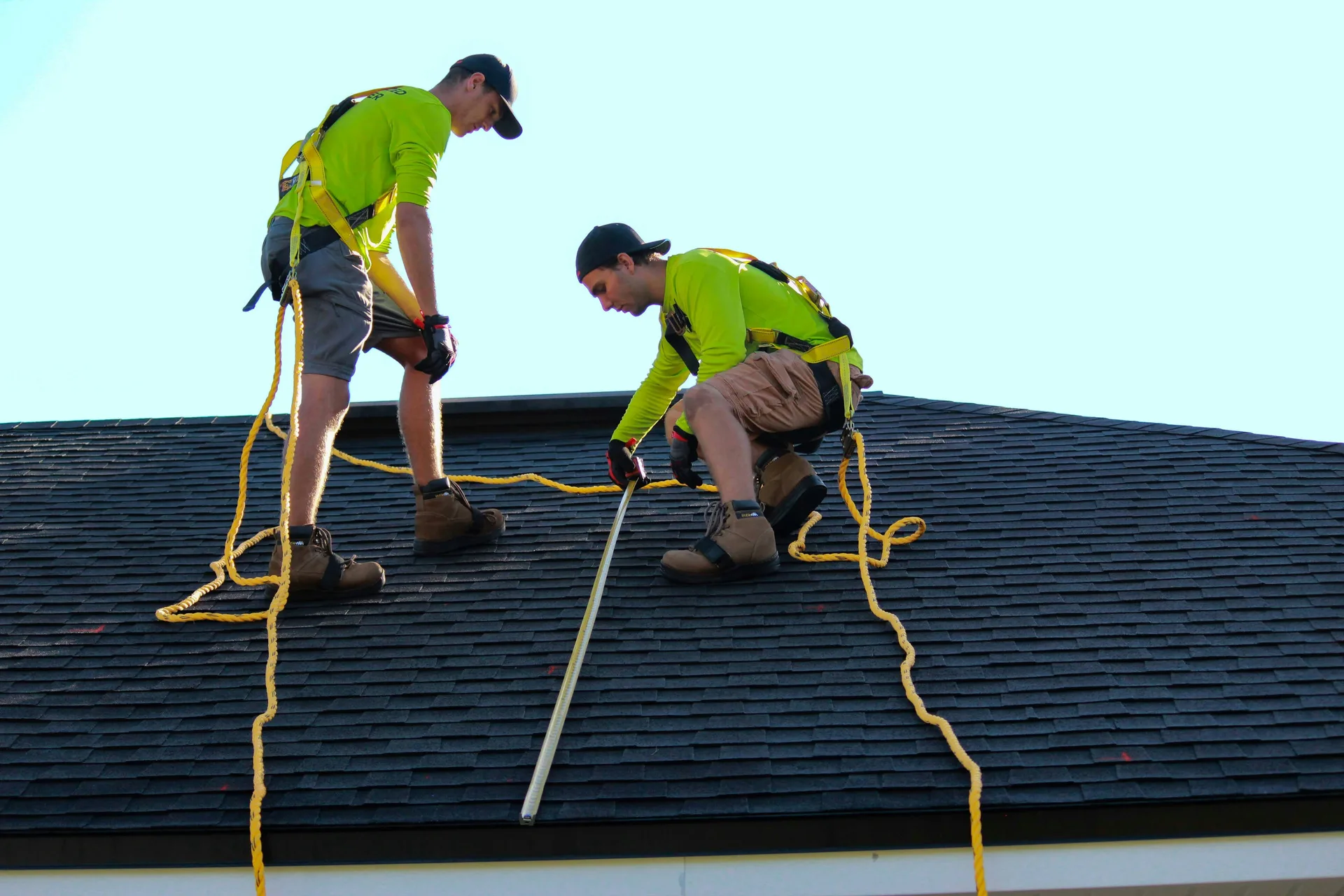
Licensed roofing inspectors in Kentucky use ladders, harnesses, moisture meters, and high-resolution cameras to document hail damage. Moisture meters detect hidden leaks in decking that aren't visible from the surface. Inspectors walk the entire roof, marking damaged areas with chalk or flagging tape, and photograph each zone from multiple angles.
Most inspectors produce a written report with photo documentation, damage location diagrams, and replacement cost estimates. This report becomes the foundation for insurance claims. Kentucky doesn't require state-level roofing contractor licensing, but municipalities enforce permit and inspection rules — verify your inspector holds local credentials.
HAAG-certified inspectors are trained specifically in storm damage assessment and carry credentials recognized by most insurance carriers. Certification doesn't guarantee honesty, but it indicates formal training in hail impact analysis and damage differentiation from normal wear.
How Do You Tell Hail Damage Apart from Age-Related Wear?
Hail damage shows random, circular impact marks across multiple shingle tabs, while aging creates uniform granule loss, curling edges, and cracking along tab lines. Kentucky roofs aged 15 years or older show natural wear — shingles lose flexibility, granules thin evenly, and tabs curl upward from heat cycling. Hail bruising appears as isolated divots with intact surrounding surfaces.
Impact marks from hail are soft to the touch — press a bruised area and the shingle feels spongy or compresses slightly. Aged shingles feel brittle and stiff. Storm damage often concentrates on one or two roof planes depending on wind direction, while aging affects all exposures equally.
Insurance adjusters in Kentucky distinguish between the two by looking for storm date correlation, concentrated damage patterns, and metal component dents that can't result from aging. If an adjuster finds only wear-related damage, replacement may not be covered — but documented hail impact within your policy window usually qualifies.
What Should You Expect to Pay for Roof Replacement After Hail Damage in Kentucky?
Full asphalt shingle roof replacement in Kentucky costs $8,000 to $18,000 for a typical 2,000-square-foot home with moderate pitch and standard architectural shingles. Hail-resistant Class 4 impact-rated shingles add $1,500 to $3,500 to total project cost but may qualify for insurance discounts of 15% to 30% on premiums. Estimates based on available industry data; individual project costs vary by roof size, pitch, material, and regional labor rates.
Steeper roofs, multiple stories, and complex layouts with dormers or valleys increase labor costs. Decking replacement adds $2 to $4 per square foot if hail has punctured sheathing. Metal roofing costs $12,000 to $25,000 for the same home but carries 50-year warranties and superior hail resistance.
Insurance typically covers replacement cost minus your deductible if hail damage is documented and reported promptly. Kentucky homeowners carry deductibles ranging from $1,000 to $2,500 on average. Contractors should provide itemized estimates that match insurance scope — avoid any contractor who offers to waive your deductible, as that violates most carrier agreements.