What Does Hail Damage Actually Look Like on a Minnesota Roof?
Hail damage on asphalt shingles appears as circular bruises with lost granules exposing the black asphalt mat underneath, typically 0.5 to 2 inches in diameter depending on hailstone size. These impact marks feel soft when pressed because the fiberglass mat underneath is fractured, even when the shingle hasn't torn through. Damage concentrates on roof slopes facing the storm direction and around edges, vents, and valleys where wind accelerates hail velocity.
Granule loss from hail impact is distinct from normal aging—hail creates defined circular patterns with sharp edges, while UV wear produces diffuse thinning across the entire shingle surface. Check downspouts and gutters after suspected hail events; excessive granules collecting within 48 hours of a storm indicate fresh impact damage. Minnesota's freeze-thaw cycles accelerate deterioration once the protective granule layer is compromised, turning minor bruising into water infiltration points within one winter season.
Metal roof components show different damage patterns: dented flashing around chimneys and vents, dimpled ridge caps, and small craters in aluminum drip edge. These metal indicators help confirm hail size and intensity even when shingle damage is harder to assess from the ground.
When Should You Schedule an Inspection After a Minnesota Hail Storm?
Schedule a professional roof inspection within 7 to 14 days after any hail event producing stones larger than 1 inch in diameter, which Minnesota typically sees 3 to 6 times per year in hail-prone counties including Hennepin, Ramsey, Dakota, and Anoka. Most homeowners insurance policies in Minnesota require claim filing within 1 year of damage, but contractor availability tightens significantly 30 to 60 days after major regional storms as demand surges. Inspecting early preserves your position in the repair queue before summer construction season peaks.
Don't wait for visible leaks to appear. Hail bruising compromises shingle integrity immediately, but water infiltration may not show inside your home for 6 to 18 months as Minnesota's seasonal moisture and temperature swings exploit the weakened areas. By the time ceiling stains or attic moisture become obvious, underlying decking rot often requires more extensive replacement, adding $2,000 to $8,000 to total project costs.
If you're uncertain whether your area experienced damaging hail, check the National Weather Service Storm Prediction Center's hail report database for confirmed events by county and date. Reports showing 1.5-inch or larger hail within 5 miles of your address warrant inspection even without obvious ground-level damage.
What Areas of Your Roof Are Most Vulnerable to Minnesota Hail?
South and west-facing roof slopes sustain the heaviest hail damage in Minnesota because prevailing storm systems move from southwest to northeast, driving hail at angles that concentrate impact force on these exposures. A roof with mixed orientations often shows severe bruising on southwest sections while north-facing slopes remain largely intact from the same storm. Inspectors prioritize these high-impact zones during assessments to determine whether damage justifies full replacement or isolated repair.
Roof penetrations—plumbing vents, exhaust stacks, skylights, and chimney flashing—create turbulence zones where hail strikes with increased velocity and frequency. Sealant around these features degrades faster under impact stress, creating leak pathways that bypass the shingle layer entirely. Inspectors check these areas with particular attention because failure here causes interior damage disproportionate to the size of the compromised area.
Low-slope sections, valleys, and eave edges collect hail-driven granule deposits that trap moisture and accelerate rot in Minnesota's humid summer months. These transitional zones also experience repeated freeze-thaw cycling in spring and fall, expanding any cracks initiated by hail impact. A thorough inspection documents damage density across all these vulnerability points to build a complete claim profile.
How Do Professional Inspectors Assess Hail Damage Versus DIY Checks?
Licensed roofing contractors and HAAG-certified inspectors use standardized test squares—typically 10x10 foot sections on each slope—to count impact marks per 100 square feet, which insurance adjusters use to determine whether damage meets replacement thresholds. Most Minnesota carriers approve full replacement when inspectors document 8 or more hail strikes per test square across multiple roof planes. Homeowners walking their own roofs rarely use this methodology and often misidentify wear patterns as impact damage or miss bruising entirely in shaded areas.
Professional inspectors bring calibrated tools: digital cameras with macro capability to document granule displacement, moisture meters to detect hidden decking compromise, and chalk or markers to flag damage locations for adjuster review. They also assess collateral indicators—dented gutters, damaged soffit vents, and struck air conditioning units—that corroborate hail size and establish storm timing for claim purposes. This documentation standard matters because Minnesota insurers increasingly require photo evidence tagged with GPS coordinates and timestamps.
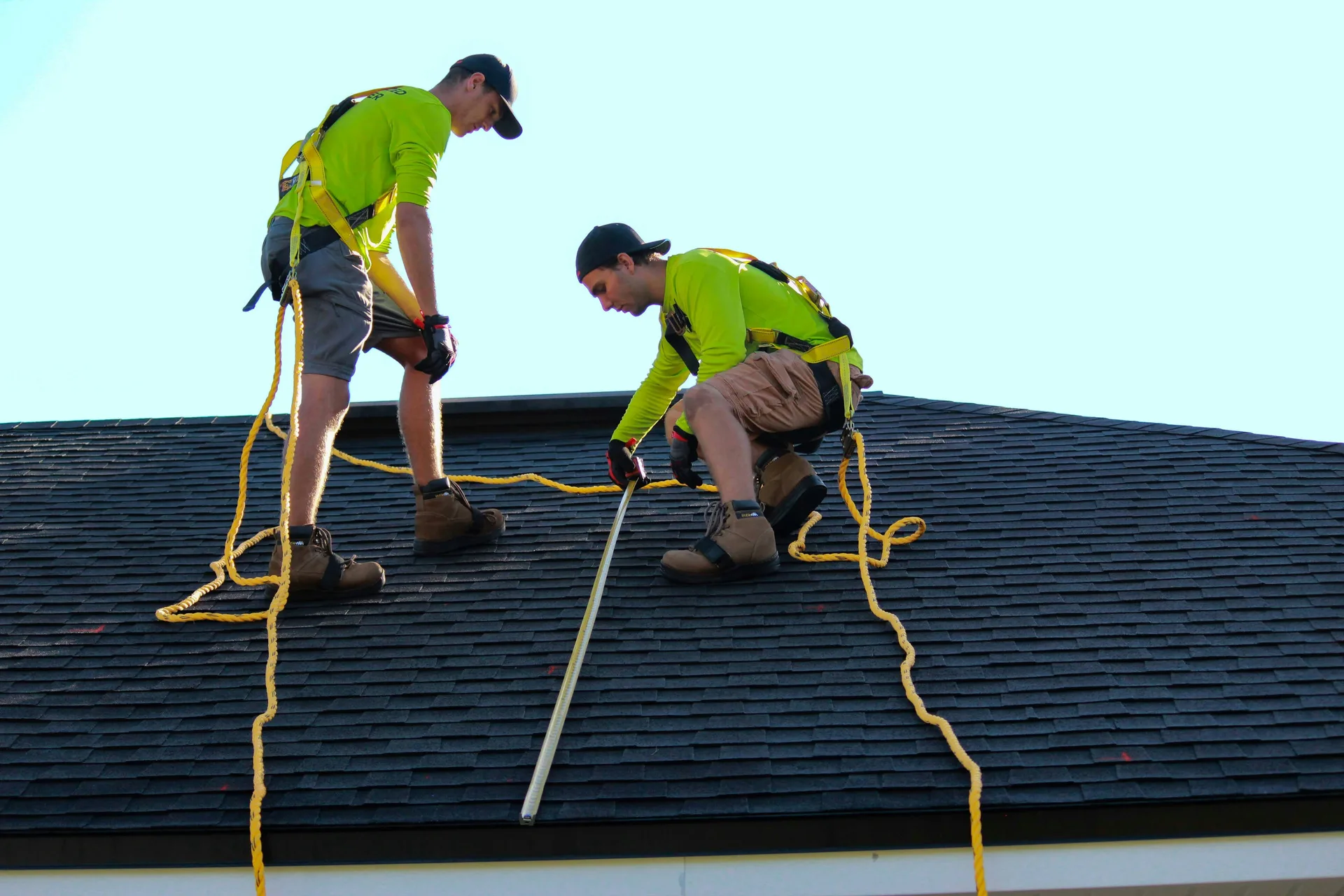
DIY inspection from the ground misses critical damage. Binoculars can't assess whether a dark spot is shadow, algae staining, or actual bruising with mat exposure. Walking the roof yourself risks further damage if you step on already-compromised shingles, and most homeowners lack fall protection equipment required by Minnesota OSHA regulations for roof access above single-story height.
What Does a Hail Damage Roof Replacement Cost in Minnesota?
Full asphalt shingle replacement after hail damage in Minnesota ranges from $8,500 to $18,000 for a typical 2,000 square foot ranch-style home with moderate pitch, based on current metro area contractor rates and GAF or CertainTeed Timberline HDZ material costs. Estimates based on available industry data; individual project costs vary by roof size, pitch, material, and regional labor rates. Homes with steeper pitch, multiple valleys, or complex layouts with dormers and intersecting planes add $2,000 to $6,000 due to increased labor hours and material waste.
Insurance claims cover replacement cost minus your deductible—most Minnesota homeowners carry $1,000 to $2,500 deductibles on dwelling coverage. If your adjuster approves a $14,000 replacement and your deductible is $1,500, you pay $1,500 and the carrier covers $12,500. Upgrading to impact-resistant Class 4 shingles like GAF Timberline HDZ RS or CertainTeed Northgate adds $1.50 to $2.00 per square foot but qualifies for premium discounts of 10% to 30% on many Minnesota policies, recovering the cost difference within 4 to 7 years.
Permit fees in Minnesota municipalities range from $150 to $400 depending on project size and jurisdiction. Most Twin Cities suburbs require permits for full tear-offs; inspectors verify proper underlayment installation and flashing details. Contractors familiar with local codes include these fees in their estimates, but confirm permit responsibility in your contract to avoid surprise charges.
How Can You Verify a Roofing Contractor Is Qualified for Hail Damage Work?
Minnesota does not issue state-level roofing contractor licenses—regulation occurs at the municipal level in cities like Minneapolis, St. Paul, Bloomington, and Rochester, each with distinct bonding and registration requirements. Verify your contractor holds the required local license by checking with your city or county building department directly; many maintain online verification portals. Contractors operating without local credentials can leave you liable for workmanship defects and permit violations that complicate future home sales.
Request proof of both general liability insurance and workers' compensation coverage before signing any contract. Minnesota statute requires workers' comp for roofing crews, and homeowners can be held liable for on-site injuries if the contractor lacks coverage. Call the insurance carrier listed on the certificate to confirm the policy is active and covers the dates of your project. Legitimate contractors provide this documentation within 24 hours of request; resistance or delay is a red flag.
HAAG Engineering certification and manufacturer credentials like GAF Master Elite or CertainTeed SELECT ShingleMaster indicate advanced training in storm damage assessment and installation standards. These certifications aren't required by law, but they correlate with contractors who handle insurance claim documentation competently and install materials to warranty specifications. Minnesota's post-storm market attracts out-of-state crews; verify the contractor has a permanent Minnesota business address and local references from projects completed in the past 18 months.