How Do You Know Storm Damage Is Too Extensive for Repair?
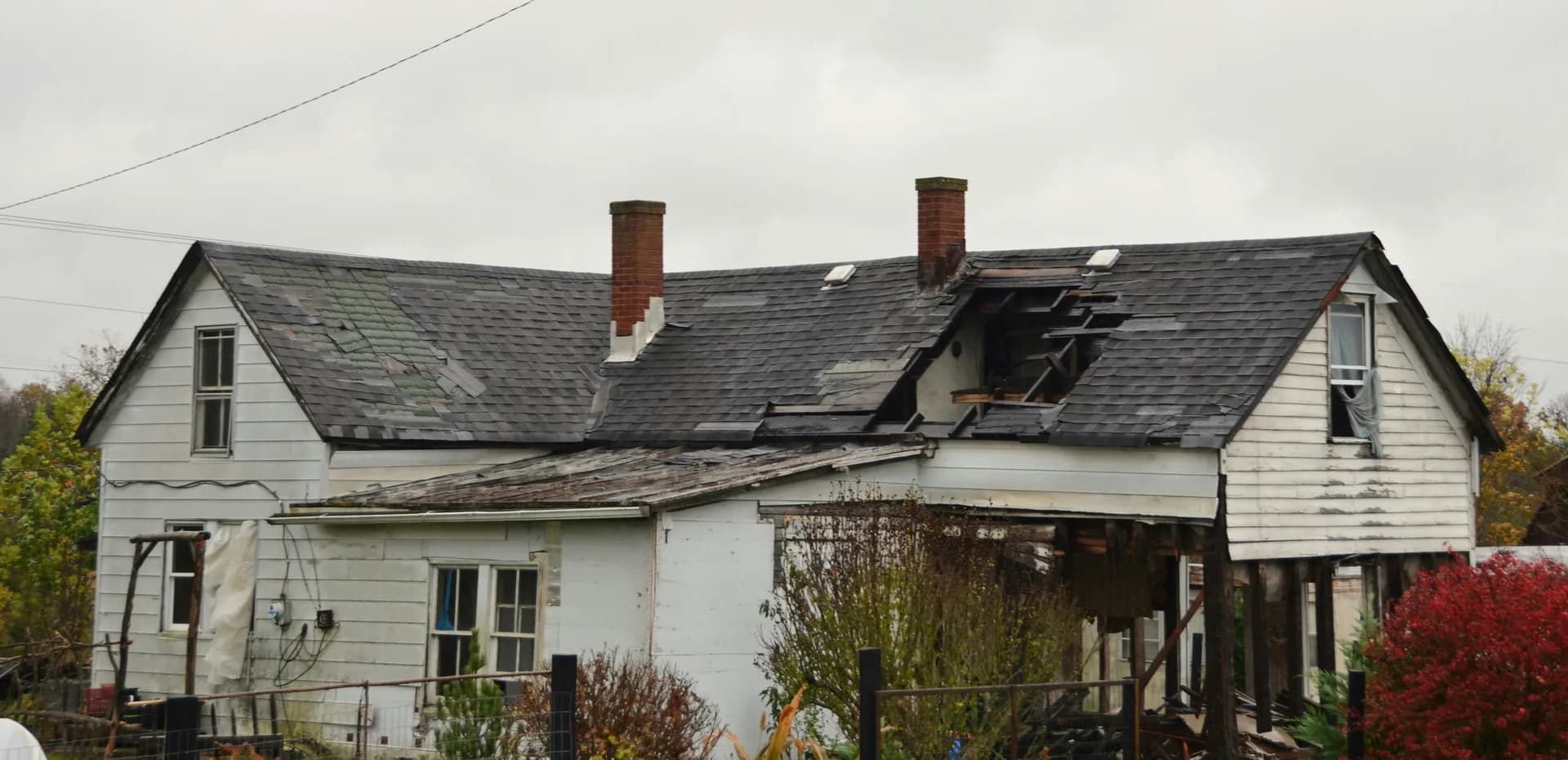
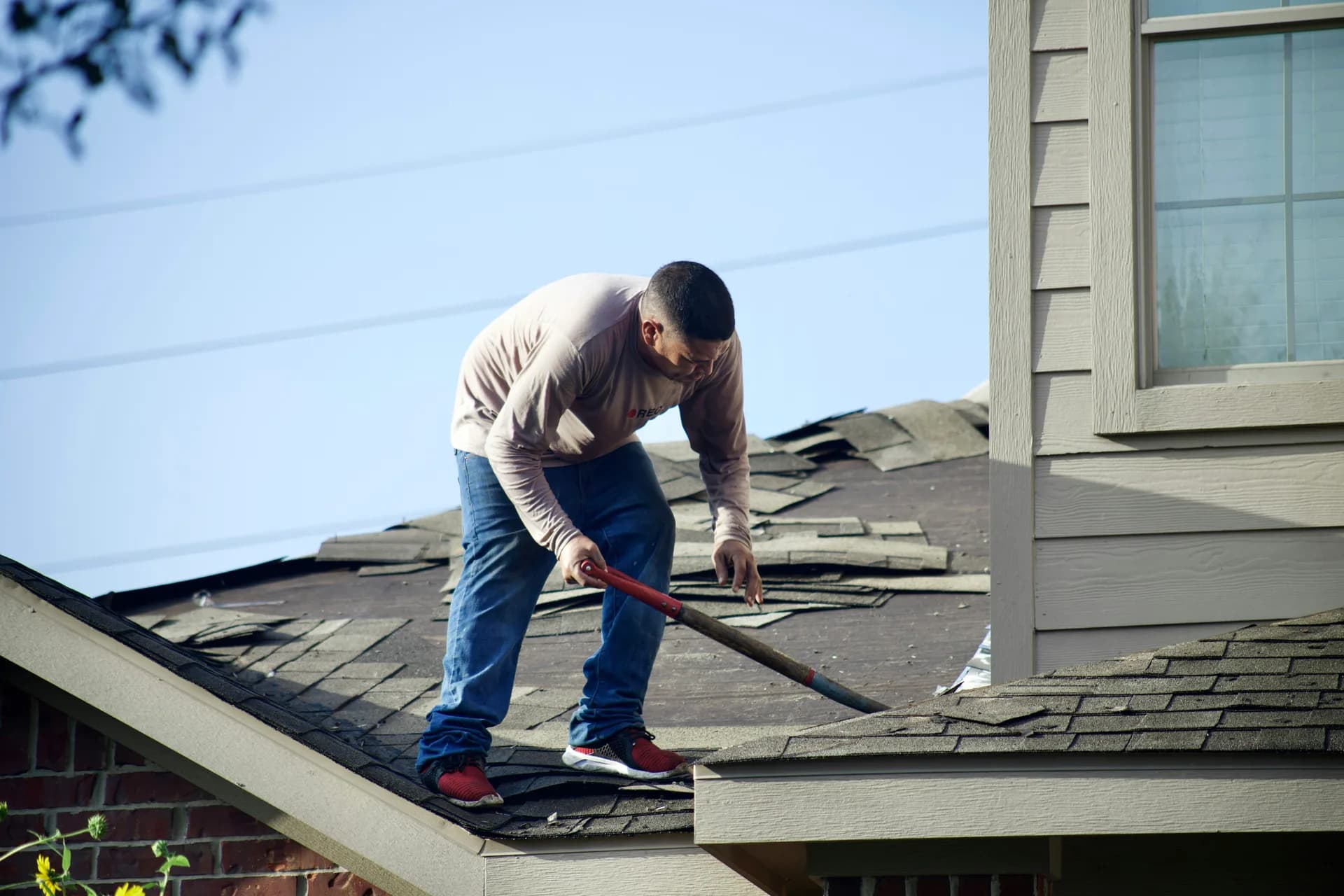
Damage is too extensive for repair when hail bruising or wind-stripped shingles appear on three or more roof planes, when missing shingles exceed 100 square feet in total area, or when the roof's underlying structure shows water intrusion signs like sagging decking or ceiling stains inside. A single-plane repair on a newer roof costs $800–$2,500 in Indiana; full replacement on a typical 2,000 square foot ranch runs $8,500–$16,000 depending on material and pitch.
Insurance adjusters in Indiana counties with frequent hail activity—Marion, Hamilton, Johnson, Hendricks—typically recommend replacement when 8 or more hail strikes appear per 10x10 foot test square, measured across multiple roof sections. Wind damage from derechos or tornado periphery events often strips entire ridge lines or exposes felt paper across large sections, which makes isolated patching structurally unsound.
If your roof was installed before 2010 and now shows storm damage, replacement is the better financial decision. Repair costs on aging roofs compound quickly when the next storm arrives, and Indiana sees an average of 30–50 hail days per year statewide.
What Repair Scenarios Actually Make Sense in Indiana?
Repair makes sense when damage is confined to one roof plane, involves fewer than 10 individual shingles, and your roof is under 10 years old with no prior storm claims. Isolated wind damage from a single microburst or tree limb strike typically falls into this category, with repair costs ranging from $600–$1,800 depending on accessibility and shingle match availability.
Roofs with architectural shingles installed in the last 5 years are good repair candidates if hail strikes are shallow and limited to south-facing slopes where sun exposure concentrates. Flat repairs on newer roofs preserve manufacturer warranties in many cases, while premature replacement can void remaining coverage.
Temporary repair—tarping and emergency patching—is appropriate when full replacement can't happen until spring. Indiana winters make shingle installation unreliable below 40 degrees, so storm damage occurring November through February often requires staged work: immediate leak mitigation, then full replacement in March or April.
How Does Indiana Storm History Affect the Decision?
Indiana averages 1,200+ hail reports annually, with peak activity March through June. If your neighborhood experienced hail larger than 1 inch in diameter—common in central Indiana counties during springtime supercells—replacement is the safer long-term choice even if current visible damage seems repairable.
Counties along the I-69 and I-65 corridors—Allen, Delaware, Marion, Monroe, Clark—see repeated hail events within 3–5 year cycles. A roof repaired after one event will likely face another storm before the end of its expected lifespan, making the cumulative repair cost higher than a single replacement with impact-resistant shingles rated Class 4.
Northern Indiana communities near South Bend and Fort Wayne also contend with ice dam damage from heavy snow winters, which compounds existing storm wear. If your roof shows both hail bruising and ice-related granule loss, replacement with better ventilation and underlayment is the only fix that addresses both problems.
What Does Replacement Cost in Indiana After Storm Damage?
Full replacement on a typical Indiana ranch home ranges from $8,500 to $16,000 for asphalt shingles, $12,000 to $22,000 for architectural shingles with Class 4 impact rating, and $18,000 to $35,000 for metal roofing designed to handle hail and high winds. Costs vary by roof pitch, number of penetrations, and whether decking replacement is needed.
Insurance typically covers replacement minus your deductible when storm damage is documented by a licensed adjuster. Indiana homeowner deductibles for wind and hail average $1,000 to $2,500, though some policies carry percentage-based deductibles in high-claim counties.
Material choice matters in storm-prone areas. Class 4 impact-resistant shingles cost 10–15% more upfront but qualify for insurance discounts of 10–30% annually in most Indiana markets, and they resist hail damage that would total a standard 3-tab roof. Estimates based on available industry data; individual project costs vary by roof size, pitch, material, and regional labor rates.
What Should You Look for When Hiring a Contractor After a Storm?
Verify the contractor holds an active business license with the municipality where you live—Indiana does not require state-level roofing licenses, so licensing is handled city by city or county by county. Request proof of liability insurance with at least $1 million coverage and workers' compensation for all crew members.
Avoid contractors who knock on your door unsolicited within 48 hours of a storm, offer to waive your insurance deductible, or pressure you to sign a contract before an adjuster inspects the damage. Legitimate contractors provide written estimates that itemize materials, labor, permit fees, and timeline, and they allow you time to compare multiple bids.
Ask for references from projects completed in the last 12 months in your county. Storm-focused contractors working Indiana should be able to show recent work in your area with verifiable addresses and homeowner contacts. Check complaint history with the Indiana Attorney General's Consumer Protection Division before signing.
How Long Does Replacement Take After Approval?
Replacement timelines in Indiana depend on contractor availability, material delivery, and weather windows. From insurance approval to project completion, expect 3–6 weeks during peak storm season (April through July) and 2–4 weeks during slower fall months.
Most Indiana municipalities require a building permit for full roof replacement, with permit approval taking 3–7 business days in mid-sized cities like Bloomington, Carmel, and Evansville, and up to 2 weeks in smaller townships with part-time permitting staff. The contractor pulls the permit using your signed contract and proof of insurance claim approval.
Actual installation takes 1–3 days for most single-family homes under 3,000 square feet, assuming no significant decking replacement. Homes with complex roof lines, multiple dormers, or steep pitch add time. Weather delays are common in spring when afternoon thunderstorms interrupt work.