What Type of Storm Damage Automatically Requires Replacement in Michigan?
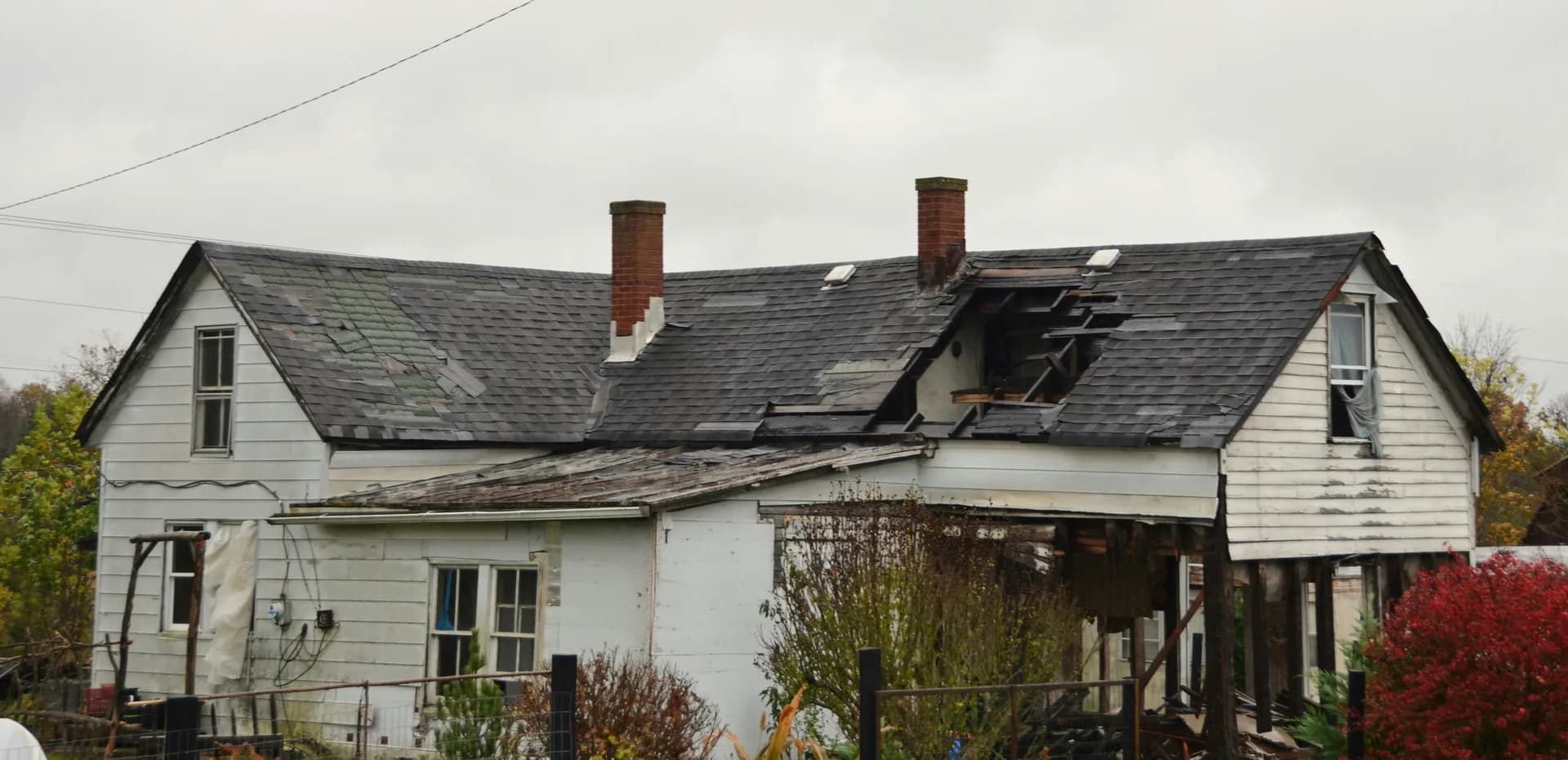
Hail larger than 1 inch that creates bruising across multiple roof slopes requires replacement, not repair, because hidden mat damage weakens shingles even when granule loss looks minor. Michigan sees an average of 3–5 severe hail events per year across the Lower Peninsula, with golf ball-sized hail common in May and June. Wind speeds over 70 mph during derechos or tornado activity can strip adhesive seals and crack shingle tabs beyond what spot repairs can fix.
If your adjuster finds impact damage on more than 8 shingles per 100 square feet in any test square, most carriers classify the roof as totaled. That threshold exists because scattered hail hits compromise the entire mat layer, reducing the roof's effective lifespan to 3–5 years even if it looks intact. Repairing a hail-damaged roof delays failure without fixing the underlying structural weakness.
Winter ice damming that causes interior water stains in multiple rooms signals deck rot, not just shingle damage. Ice dams form when attic heat melts snow unevenly, and meltwater refreezes at the eave, forcing water under shingles and into the decking. If you see sagging ceiling drywall or brown water rings after a January thaw, replacement includes both shingles and damaged decking sections.
When Does Localized Wind Damage Qualify for Repair Instead of Replacement?
Repair works when wind damage affects fewer than 30% of shingles on a single slope and your roof is under 10 years old with matching replacement shingles still available from the manufacturer. Straight-line winds during Michigan thunderstorms often peel back ridge caps or lift corner shingles on the windward slope without touching the rest of the roof. If your contractor can source exact color and product matches, a repair maintains warranty coverage and costs $1,200–$3,500 depending on slope access.
Shingle discontinuation makes repair unworkable on roofs over 12 years old. GAF, CertainTeed, and Owens Corning cycle out colors every 8–10 years, and a mismatched repair creates visible patchwork that lowers resale value more than a full replacement. If your adjuster writes an estimate for 40 replacement shingles but your product line was discontinued in 2019, push for a full replacement instead of accepting a repair with mismatched materials.
Roofs with prior repair history lose structural uniformity. A second wind event that damages a previously repaired section almost always triggers replacement because insurance carriers won't pay for overlapping repair zones. If your roof was patched after a 2021 windstorm and sustained new damage in 2024, expect the adjuster to total the roof rather than authorize another repair.
How Does Michigan's Climate History Affect the Replace vs Repair Decision?
Michigan's freeze-thaw cycle accelerates shingle aging, so a roof approaching 15 years old with any storm damage should be replaced rather than repaired. Shingles rated for 25-year lifespans in southern states fail at 18–20 years in Michigan because winter expansion and contraction crack sealant bonds and curl tab edges. A 14-year-old roof with moderate hail damage has maybe 4 years of useful life left, making repair a short-term fix that delays an inevitable replacement.
The Great Lakes create localized wind shear and lake-effect snow bands that concentrate storm damage in coastal counties. Homes within 20 miles of Lake Michigan or Lake Huron face 40% higher wind exposure than interior Michigan properties, and a repair on a lakeshore roof rarely lasts more than 3–4 years before the next event. If you're in Muskegon, Traverse City, or Alpena and your roof has any post-storm damage, replacement offers better long-term value than repeated repairs.
Hail frequency in Kent, Ottawa, and Kalamazoo counties averages one severe event every 18 months, based on NOAA storm reports from 2015 to 2023. Homeowners in these counties should bias toward replacement after any documented hail strike because the next event will likely occur before a repaired roof reaches its expected lifespan. Repair makes sense in low-frequency hail zones like the Upper Peninsula, where severe hail happens once every 5–7 years.
What Are the Real Cost Differences Between Repair and Replacement in Michigan?
Roof repairs for isolated wind damage in Michigan cost $1,200–$4,000 depending on slope count and shingle accessibility, while full replacements on a typical 2,000 square foot ranch run $8,500–$16,000 for architectural shingles. Repairs look cheaper initially, but two repairs over five years cost more than a single replacement, and resale appraisals penalize homes with visible patchwork roofs by $3,000–$7,000 in market value. Replacement resets your insurance risk profile and often qualifies for premium discounts of 10–15% with impact-resistant shingles.
Michigan contractors charge $150–$250 per square for repair work compared to $350–$550 per square for full tear-off and replacement, but repair estimates exclude hidden costs like deck reinforcement or drip edge upgrades required by current building code. A repair quote that looks like $2,800 can become $5,200 once the contractor opens the damaged section and finds soaked OSB or missing flashing. Replacement quotes include deck inspection and code upgrades, so the final invoice rarely exceeds the estimate by more than 5%.
Insurance deductibles in Michigan average $1,500–$2,500 for wind and hail claims, and carriers won't pay separately for a repair now and a replacement later if both stem from the same storm event. If your damage estimate is $4,000 and your deductible is $2,000, you're paying $2,000 out of pocket for a repair that might last three years. A replacement estimate of $12,000 means you pay the same $2,000 deductible but get a roof warranted for 20+ years. The math favors replacement unless repair costs fall under your deductible.
How Do You Verify Whether a Contractor's Recommendation Is Legitimate?
Get written damage documentation from your insurance adjuster before accepting any contractor's recommendation to replace or repair. Legitimate Michigan roofing contractors wait for the adjuster's report and then bid based on the documented scope, while storm chasers pressure homeowners to sign contracts before the claim is filed. If a contractor offers to "eat your deductible" or promises a specific insurance payout, they're violating Michigan's Home Improvement Contract Act and you should end the conversation.
Ask for proof of an active Michigan builder's license and general liability coverage with limits of at least $1 million per occurrence. Michigan requires state-level licensing for any roofing project over $600, and legitimate contractors carry GL policies that name your property as an additional insured during the work period. A contractor who can't produce a license number you can verify through michigan.gov/lara is operating illegally, and any contract you sign is unenforceable.
Request a line-item estimate that separates material, labor, permits, disposal, and deck repairs instead of a single lump-sum price. Contractors who refuse to itemize costs are hiding margin in vague categories or planning to cut corners on underlayment and flashing. A trustworthy estimate lists shingle brand and product line, specifies ice and water barrier coverage, and includes permits filed with your local building department. If the estimate says "standard materials" without naming manufacturers, the contractor plans to use builder-grade products that void manufacturer warranties.