What Level of Storm Damage Requires Full Roof Replacement in Nebraska
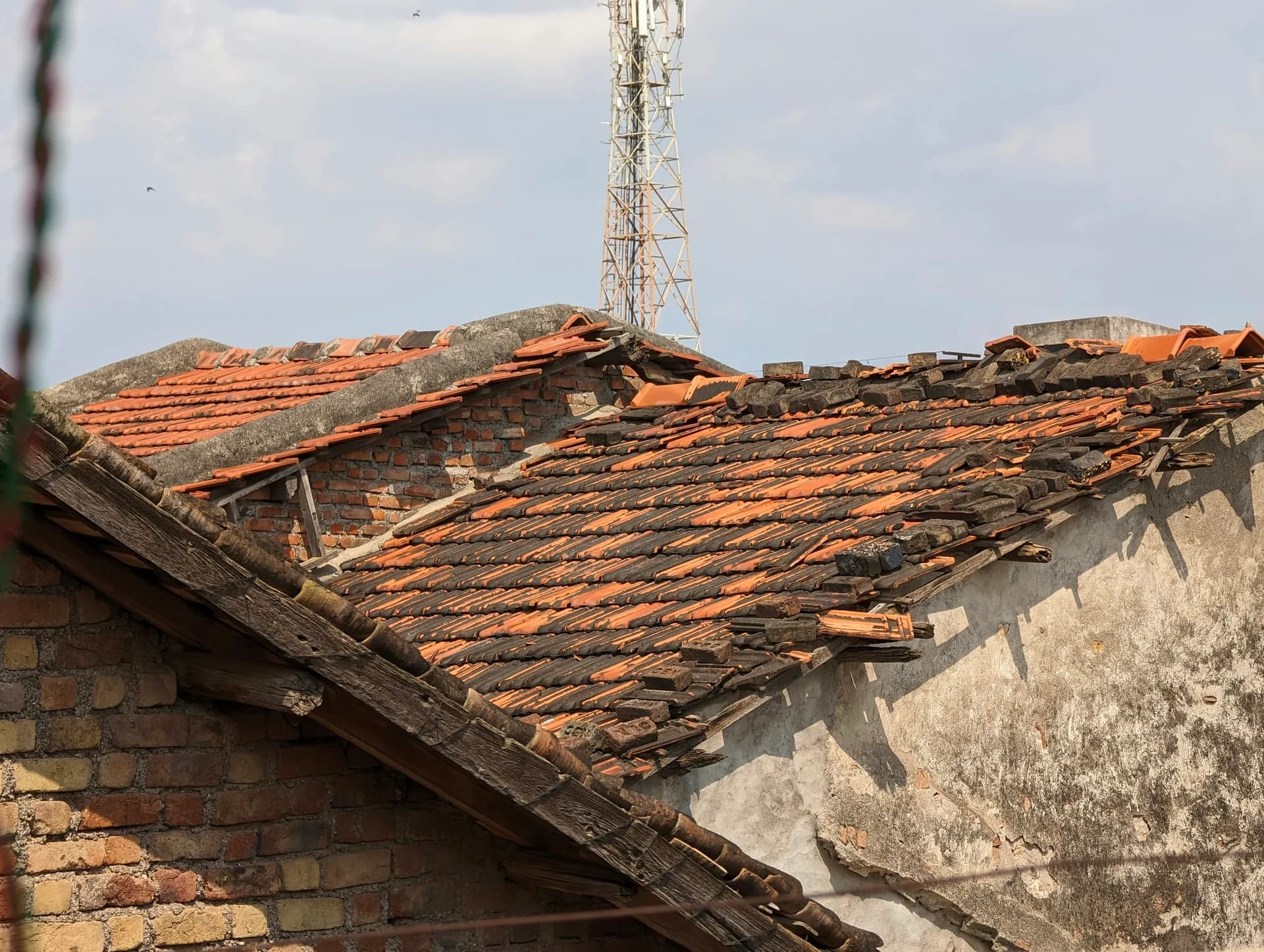
Damage covering more than 30% of your roof surface requires replacement, not repair. Insurance adjusters in Nebraska use this threshold because scattered repairs on a compromised roof fail within two to three years. Hail damage across multiple roof planes, wind damage that removed entire shingle rows, or bruising patterns visible on three or more slopes all cross this line.
Age compounds the decision. If your asphalt shingles are over 15 years old and you have any measurable hail damage, replacement is the correct call. Shingles lose granule adhesion and impact resistance after 12 years in Nebraska's freeze-thaw cycles. A 17-year-old roof with hail bruising will fail in sections even if you patch the visible damage now.
Multiple leak points after a storm signal structural compromise. One active leak from a missing shingle is repairable. Three leaks across different roof sections mean underlayment failure or decking damage. Contractors cannot seal that reliably without removing large sections of the roof, which costs nearly as much as replacement.
How Nebraska's Hail Frequency Changes the Repair vs Replace Calculation
Nebraska ranks third nationally for hail claim frequency, with an average of 96 hail days per year statewide. That means your roof will take repeated impacts over its lifespan. Repairing hail damage on a roof that will face another hail event in 18 months wastes money because the next storm finishes what the first one started.
Counties along the I-80 corridor from Lincoln to North Platte see the highest hail frequency. Lancaster, Seward, York, Hall, and Dawson counties average 12 to 15 hail days annually. If you live in this zone and your roof shows any hail bruising, plan for replacement. The next severe hail event is a statistical certainty within three years.
Insurance companies know this. Nebraska carriers often approve full replacement after a single hail event if the roof is over 10 years old, even if current damage sits below 30%. They would rather replace now than pay for emergency repairs after the next storm causes sudden failure.
What Does Roof Replacement Cost After Storm Damage in Nebraska
Full asphalt shingle replacement on a typical 2,000 square foot ranch costs $9,000 to $15,000 in Nebraska. A two-story home with steeper pitch and multiple roof planes runs $14,000 to $22,000. Impact-resistant shingles rated Class 4 add $1,500 to $3,000 to the total but reduce future hail damage and may lower your insurance premium by 10% to 20%.
Your insurance deductible structures the out-of-pocket cost. Most Nebraska homeowners carry a 1% wind and hail deductible, which means $2,000 to $3,500 on a $250,000 home. If your claim is approved for $16,000 and your deductible is $2,500, you pay $2,500 and the carrier covers the rest. Contractors who offer to waive your deductible are violating insurance fraud statutes.
Repairs cost $400 to $1,200 for isolated wind damage under 15 shingles. Tarping and emergency sealing after a storm runs $300 to $800. If your damage qualifies for insurance coverage, those emergency costs usually apply toward your deductible.
Which Roofing Materials Handle Nebraska Storm Conditions Best
Class 4 impact-resistant asphalt shingles handle Nebraska hail better than standard three-tab or architectural shingles. GAF Timberline HDZ, CertainTeed Northgate, and Owens Corning Duration Storm carry UL 2218 Class 4 ratings, meaning they survive two-inch ice ball impacts in lab testing. Hail larger than two inches still damages them, but they resist the one-inch to 1.75-inch hail that falls most often in Nebraska.
Metal roofing outperforms asphalt in wind resistance and hail durability. Standing seam metal roofs rated for 140 mph winds handle Nebraska's straight-line wind events and derechos without lifting. Hail dents metal but rarely punctures it. Total cost runs $18,000 to $35,000 on a 2,000 square foot home, roughly double asphalt, but lifespan exceeds 40 years.
Standard architectural shingles work if your budget cannot stretch to Class 4 or metal. Choose shingles rated for 130 mph wind and verify the contractor uses six nails per shingle in high-wind zones. Nebraska building code requires this in most counties, but enforcement is inconsistent.
How to Identify Contractors Who Handle Storm Damage Correctly
Licensed local contractors who maintain a physical office in Nebraska and carry active general liability and workers' compensation insurance are your safest choice. Verify the business address on Google Maps before signing anything. Storm chasers operate out of hotel rooms and disappear after depositing your insurance check.
Ask for references from projects completed in the last 12 months within 30 miles of your home. Call two of them. Ask whether the contractor finished on schedule, handled the insurance paperwork correctly, and returned to address any issues after final payment. Contractors with local reputation risk show up for callbacks. Out-of-state crews do not.
Request a written estimate that breaks out material cost, labor cost, permit fees, and disposal fees separately. Compare at least three estimates. The lowest bid is often a signal of misclassified labor, unlicensed subcontractors, or plans to cut material quality. The highest bid is not always the best work. Middle-range bids from contractors who explain their process clearly and answer questions without pressure usually deliver the best outcome.
What Happens If You Delay Replacement After Storm Damage
Delaying replacement after confirmed structural damage voids most insurance claims if a second storm causes additional loss. Nebraska carriers include policy language that requires homeowners to mitigate damage promptly. If you know your roof is compromised and you wait four months, then a wind event causes interior water damage, the carrier will deny the water damage claim.
Hidden hail damage worsens over time. Bruised shingles lose granule adhesion within six months of impact. UV exposure accelerates deterioration on damaged asphalt. A roof that looked repairable in June may show widespread failure by October as granules wash into gutters and underlayment exposure begins.
Most Nebraska municipalities require permits for roof replacement. Permit processing takes one to three weeks in Lincoln, Omaha, and Grand Island. Scheduling a licensed contractor during peak storm season adds another two to four weeks. If you wait until you see active leaks, you are looking at six to eight weeks before work starts, during which time rain enters your attic and damages insulation and framing.